

KEY TAKEAWAYS
- Millennials accounted for 33% of U.S. holiday travelers in 2025 and had the highest average planned budget of $2,602.
- Social media often inspires their travel choices, while mobile platforms and generative AI simplify planning.
- Financial pressures are changing millennial travel rather than stopping it. Many use rewards or adjust their dates to save money.
- Flexible work arrangements also make it easier to extend vacations or add leisure time to business trips.
Even as Americans planned shorter, more budget-conscious holiday trips in 2025, millennials stood out as the highest-spending generation. According to Deloitte, they set aside an average planned travel budget of $2,602.
Millennials differ from Gen X and Baby Boomers in their preference for digital planning tools, meaningful experiences, and flexible itineraries over more traditional, brand-driven vacations.
These travel trends influence everything from how millennial travelers discover destinations to where they stay and what they prioritize once they arrive. Below, we explore millennials’ digital booking habits, experience-driven priorities and the trends likely to shape travel through 2027.
Millennial Travel Statistics
Millennials remain one of the travel industry’s most influential groups. They represented 33% of U.S. holiday travelers in 2025—the largest share of any generation—and planned an average of two holiday trips, according to Deloitte. Although that was down from 2.6 trips in 2024, travel remains a priority among younger generations: 74% of millennials and Gen Z surveyed by American Express consider it a “non-negotiable” expense.
Spending can also be substantial, with Epsilon reporting that 17% of millennials spend at least $10,000 per household on travel. The study also showed that domestic trips remain especially popular, although one in four millennials plans to travel internationally within the next year.
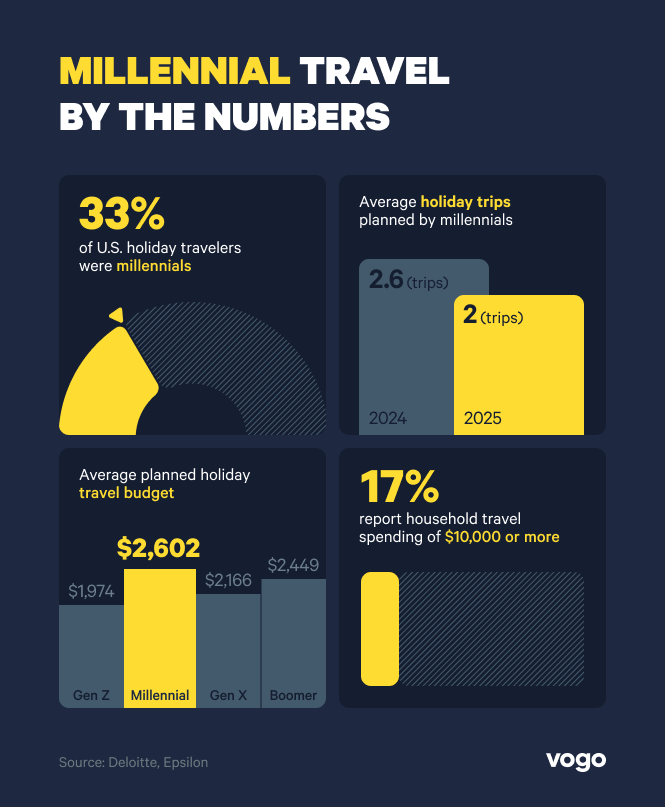
Financial pressures still influence how often millennials travel and what they can spend. Deloitte found that Millennials’ planned holiday travel budgets fell 22% between 2024 and 2025, even as Millennials maintained the highest average budget of any generation at $2,602.
Zillennials, a microgeneration born from roughly 1993 to 1998 that bridges millennials and Gen Z, illustrate this tension. Among this group, 41% earn more than $100,000 annually, while 48% live with their parents, potentially leaving them with more discretionary income for travel.
Zillennials’ spending power and comfort with digital booking make them a valuable travel audience. Many are also interested in international and cultural experiences, although affordability remains an important consideration. The Forbes study also reports that 57% of travelers who planned to cut back identified cost as the primary reason.
How Millennials Research and Book Trips
Millennials typically move across several digital touchpoints before booking. Deloitte found that 52% use social media to plan travel. Another 31% use generative AI, the highest adoption rate of any generation.
Epsilon found that 30% use AI to search for deals and 28% use it to find hotel reviews. Planning time varies by trip, although 54% of travelers surveyed by American Express prefer to research major vacations three to six months in advance. Mobile access is important throughout this journey. Prostay reports that 74% of millennials research travel on smartphones and 66% book an entire trip on a mobile device.
Recent reviews, traveler photos, and peer recommendations also help millennials confirm that a brand’s promises match the actual experience. AI plays a part in planning, too, with Deloitte finding that millennials were the generation most likely to act on AI recommendations for destinations, flights, accommodations, and restaurants.
Social Media’s Influence on Destination Choice
Social media supports both passive discovery and active trip planning. Deloitte found that 36% of millennials use short-form social video when planning travel. Prostay also reports that 75% let social media influence their travel decisions and 46% have chosen a destination after seeing it on Instagram.
Online inspiration can also influence travelers’ activities and spending once they arrive. More than 75% of millennials and Gen Z surveyed by American Express said they would seek out a viral food while traveling.
Reviews also help shape final decisions. Epsilon found that millennials value online reviews more than other generations, with 28% using AI specifically to find hotel reviews.
Why Millennials Prioritize Travel Experiences
For many millennials, a meaningful trip is about more than visiting well-known attractions. American Express found that 83% of millennials and Gen Z prioritize unique, authentic experiences over popular tourist sites, while 79% are likely to seek destination-specific workshops or activities.
These preferences also appear in solo travel statistics: 76% of millennials and Gen Z surveyed by American Express planned to take a solo trip, compared with 69% of respondents overall.
Learning and creativity also make trips more memorable: 82% of millennials and Gen Z said learning a new skill during their trip enhances the experience, and 69% consider making something by hand one of travel’s most rewarding activities.
Milestone events and popular culture provide additional reasons to explore. Among millennials and Gen Z, 84% said milestone trips, such as a 30th birthday trip, allow them to visit destinations they might not otherwise prioritize, and 79% find these trips more rewarding than a typical vacation.
Screen-inspired travel is also gaining traction. Expedia reports that 81% of Gen Z and millennial travelers plan getaways based on destinations featured in movies or television. More broadly, millennials also have a strong presence in the luxury market, accounting for 34% of the luxury travelers identified by Deloitte, more than any other generation.
Bleisure, Slow Travel and Longer Stays
Bleisure (business + leisure) travel combines a business trip with personal vacation time, while slow travel focuses on spending more time in one place to better experience its everyday culture. Long-stay trips may include either approach, with travelers extending vacations for several weeks or working remotely from a destination.
Remote and hybrid work have made these options more practical for millennials, who can stay longer without using as much paid time off. Deloitte found that 49% of employed millennial travelers planned to work during their longest holiday trip. Prostay further reports that 58% of millennials work remotely while traveling, while 62% extend business trips to pursue cultural experiences. Longer stays give travelers more time to explore and may also qualify for weekly or monthly accommodation rates.
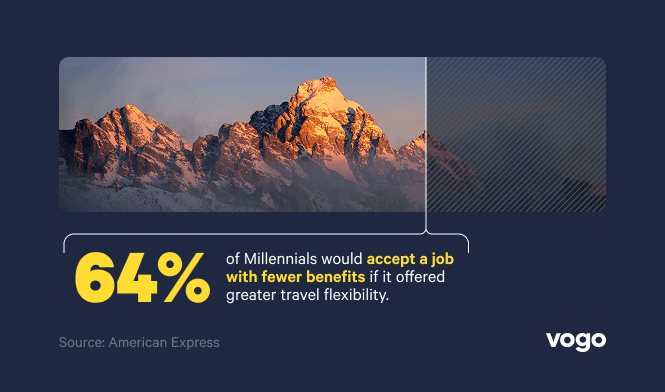
This desire for greater travel freedom may also influence career decisions. American Express found that 64% of millennials and Gen Z would accept a position with fewer benefits in exchange for greater flexibility to travel.
How Millennials Get More Value From Travel
Higher living costs and limited paid time off can leave millennials with less disposable income, but many are adjusting how they travel instead of giving it up.
Deloitte found that average planned holiday travel budgets fell 18% from 2024 to 2025, while Epsilon reports that 69% of travelers are willing to change their dates to secure a better deal. Traveling during shoulder season can reduce costs, as can comparing hotel rates across several dates. Travelers should also check the full price after fees and account for any amenities included with the stay.
Rewards programs and member rates can also make meaningful trips more affordable, with 58% of travelers (particularly millennial and Gen Z ones) using rewards to maximize savings. Other hotel booking hacks include checking for added fees and reviewing cancellation policies before choosing a property.
By spending less on lodging, travelers can leave more room in their budgets for memorable experiences.
Millennial Travel Trends to Watch Through 2027
Through 2027, millennial travel will likely emphasize flexible, longer stays, AI-assisted planning, and family trips. Remote and hybrid work will continue supporting bleisure and slow travel, while AI tools will simplify itinerary building, price comparisons, and accommodation research. Travel brands and online travel agencies will need to make their offerings easy for these tools to find and recommend.
As more millennials move into their late 30s and 40s, demand for comfortable accommodations and family-friendly travel is likely to grow. Compared with Gen Z, millennials generally have more spending power available for hotels, dining, and other trip expenses. Their planning habits also differ: Millennials lead generative AI adoption, while Gen Z relies more heavily on short-form video for travel research.
Screen-inspired travel will appeal to both groups. 53% of travelers said their interest in set-jetting increased during the previous year, and Expedia estimates it could generate $8.45 billion for the U.S. travel industry.
Start Planning Your Next Meaningful Getaway
Millennials often move across several digital touchpoints before booking, especially when comparing prices and reading reviews. Vogo streamlines the process by bringing together more than 9.8 million properties from multiple booking providers in a single search. Travelers can compare hotels and unconventional stays without visiting each provider separately.
Explore Vogo’s cheap places to travel guide for affordable destination ideas, then use Vogo to find accommodations that fit your plans and budget. By simplifying the search, Vogo leaves travelers more time to focus on the experiences that matter to them.

FAQ
Who travels more, Gen Z or Millennials?
It depends on the period and metric measured. Deloitte found that Gen Z planned an average of 2.3 holiday trips in 2025, compared with 2.1 for millennials. Millennials had the larger average budget, though planning to spend $2,602 compared with $1,974 among Gen Z.
What are the most common millennial travel trends right now?
Common millennial travel trends include experience-driven trips, digital and AI-assisted planning, sustainable choices, wellness activities, and bleisure travel. Millennials are also seeking authentic local experiences while using flexible dates and comparison tools to manage costs.
Why do millennials prefer experiences over material goods when traveling?
Travel experiences can support personal growth and help millennials express their interests and identities. Activities such as cultural workshops and local food tours can also create memories that feel more meaningful than physical souvenirs.