

KEY TAKEAWAYS
- The solo travel market is growing rapidly, projected to expand from $549.8 billion in 2025 to $1.6 trillion by 2033, with bookings up 24% since 2019.
- Solo female travel continues to lead demand, with women making up about 54% of solo travelers, while younger travelers are driving growth, with 41% of those under 45 planning solo trips.
- Cost and safety remain key considerations, with 65% of solo female travelers concerned about expenses and 33% of travelers reporting experiencing crime abroad.
- Solo travelers are increasingly intentional in their planning, prioritizing cultural experiences (69%), affordability (44%), and comparing accommodations to find the best fit for their trip.
Solo travel statistics show how quickly independent travel has moved into the mainstream. What was once considered a niche way to explore is now a common choice, driven by more flexible work arrangements and a growing preference for trips that reflect personal interests and pace. Today’s solo travelers are planning with more intention. Destination choices are often shaped by safety and accessibility, while booking decisions focus on finding the right balance of price, location, and experience.
Solo female travel continues to grow, and younger travelers are leading the shift toward more independent, self-directed trips. Understanding these solo travel industry statistics makes it easier to see where demand is heading and how travelers are approaching everything from travel budgeting to booking.
Solo Travel Market Growth
Solo travel is shifting from a niche segment to a major force in the global travel industry, especially for those seeking greater flexibility and independent trip planning. Growth projections show particularly strong momentum among international travelers, younger demographics, and experience-focused travelers.
As travel planning becomes more accessible through digital platforms and mobile booking tools, solo travel is becoming easier—and more appealing—for a wider range of travelers.
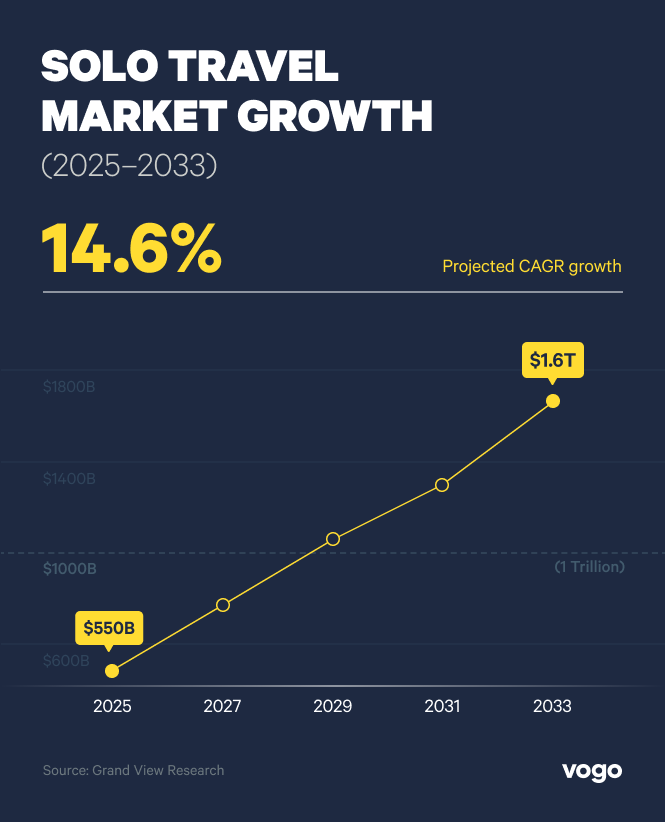
- The global solo travel market was valued at about $549.8 billion in 2025 and is projected to grow to roughly $1.6 trillion by 2033, expanding at an average annual rate of 14.6%. (Grandview Research)
- International solo travel is expected to grow at a CAGR of 15.3% from 2026 to 2033, as global travel becomes more accessible and easier to plan independently. (Grandview Research)
- Solo travel bookings have increased 24% since 2019, showing how quickly independent travel has gained momentum. (Astute Analytica)
- Cultural and heritage-focused solo travel is gaining traction, with projected growth at a CAGR of 16.1% from 2026 to 2033. (Grandview Research)
- The Asia Pacific region is one of the fastest-growing markets, with a CAGR of 16.3% from 2026 to 2033. (Grandview Research)
- India’s solo travel market is expanding even faster, with a projected CAGR of 19.5% from 2026 to 2033. (Grandview Research)
- Marketplace-based solo travel bookings on platforms like Vogo are also growing, with the segment projected to see a 14.2% CAGR from 2026 to 2033. (Grandview Research)
Demographics of Solo Travelers
Solo travel spans a wide range of ages, lifestyles, and travel preferences. Solo female travel continues to grow, and millennial travel statistics show younger travelers are especially likely to plan trips on their own.
Solo Travel by Gender
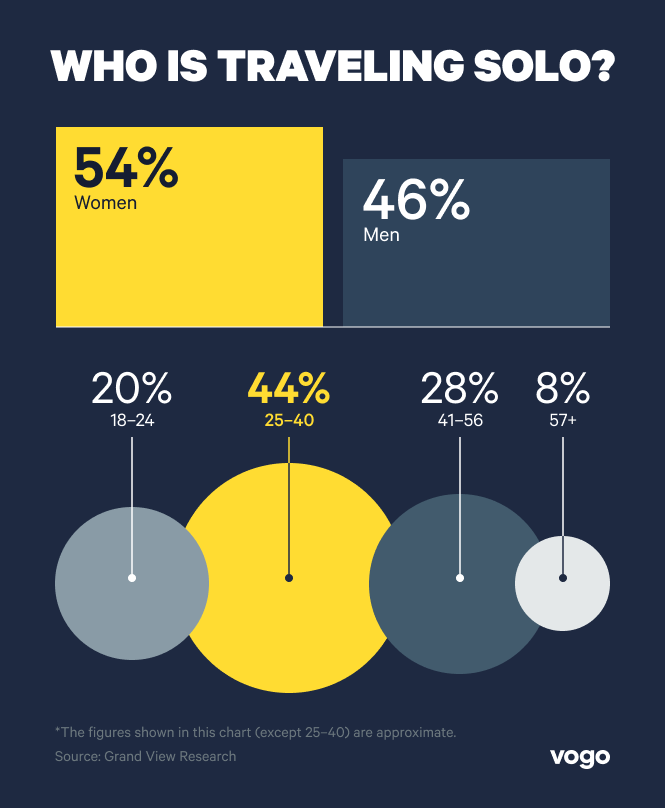
Women continue to drive much of the demand for solo travel, particularly around flexibility, self-care, and independence. Many female travelers view solo trips as an opportunity to travel on their own terms, prioritize personal interests, and build confidence through independent experiences. At the same time, participation among male travelers is also increasing, reinforcing how mainstream solo travel has become across different traveler types and age groups.
- The solo travel market is segmented by age, with strong participation from travelers under 25, ages 25 to 45, and those over 45, showing demand spans multiple life stages. (Custom Market Insights)
- Travelers between the ages of 25 and 40 made up 44.2% of the market in 2025. (Grand View Research)
- Women represent about 54% of solo travelers, making them the largest segment driving solo travel demand. (Astute Analytica)
- Among women, 87% say freedom and flexibility are reasons they travel solo. (Grandview Research)
- 78% of women say they travel solo for self-care and relaxation. (Grandview Research)
- 53% of women cite not having a travel companion as a reason for taking solo trips. (Grandview Research)
- Male solo travelers are projected to grow at a 14% CAGR from 2026 to 2033. (Grandview Research)
Age Groups Most Likely to Travel Solo
Millennials and Gen Z travelers are helping accelerate solo travel growth, especially as social media, remote work flexibility, and shorter getaway trends reshape how younger travelers plan trips. Many younger travelers prioritize independent, experience-driven travel that feels more personalized and flexible than traditional vacations. Platforms like TikTok and Instagram are also influencing how travelers discover destinations, compare experiences, and build itineraries around cultural activities and lifestyle trends.
- Solo travel intent is even higher among younger travelers, with 41% of those under 45 planning to travel alone. (Civic Science)
- Travelers ages 25 to 40 made up 44.2% of the solo travel market in 2025. (Grandview Research)
- Solo travelers ages 18 to 24 are projected to grow at a 15.8% CAGR from 2026 to 2033. (Grandview Research)
- 76% of Millennials and Gen Z travelers planned to take a solo trip. (Grandview Research)
- Gen Z travelers rely heavily on social platforms, with 55% using TikTok or Instagram as their primary source for travel inspiration. (Astute Analytica)
- 57% of Millennials and Gen Z travelers prefer quick solo weekend trips. (Grandview Research)
- 58.3% of Gen Z women are interested in traveling abroad alone. (Grandview Research)
Why Travelers Choose to Go Solo
Solo travel is increasingly tied to flexibility, personal growth, and experience-driven travel rather than simply traveling alone. Many travelers now see solo trips as an opportunity to prioritize cultural experiences and self-directed planning alongside other forms of travel. The data also suggests that solo travel is becoming increasingly normalized, with many travelers alternating between solo, group, and partner trips depending on the type of experience they want.
- 69% of travelers plan to take a solo trip, showing how mainstream independent travel has become. (American Express)
- 75% of solo travelers say they prioritize personal benefits, including self-care and mental health. (Grandview Research)
- 72% of solo travelers also traveled with others in the past year, showing that solo travel is often part of a broader travel lifestyle. (Grandview Research)
- 65% of travelers report feeling safe traveling solo in most destinations, supporting continued growth in independent travel. (Global Rescue)
- Solo travel demand is driven by a growing focus on personal growth, independence, and self-directed experiences. (Custom Market Insights)
- 69% of solo travelers prioritize cultural activities according to a survey, making it the top factor in choosing a destination. (FTLO Travel)
- 74.6% say they travel to “see the world,” highlighting curiosity as a key motivator. (FTLO Travel)
- A survey found that interest in solo travel is often driven by personal growth (33%), learning more about oneself (28%), and building confidence (28%). (Talker Research)
Challenges in Solo Travel
While solo travel offers flexibility, it also comes with tradeoffs. Travel budget, safety, and planning complexity continue to shape how travelers approach solo trips.
Cost Considerations
Cost remains one of the biggest trade-offs in solo travel because travelers often cover accommodations, transportation, and activities entirely on their own. Rising hotel and lodging prices are also making solo travel more expensive overall, especially when splitting costs with travel companions is not an option. As a result, many travelers are becoming more strategic about budgeting, carefully comparing accommodations, and prioritizing flexibility when planning trips.
- 65% of solo female travelers worry about the higher cost of traveling alone. (Grandview Research)
- 46% of male solo travelers budget USD $2,000-$10,000 or more for one trip. (Grandview Research)
- Nearly twice as many men as women spend more than USD $10,000 on a solo trip. (Grandview Research)
- Accommodation prices remain about 22% higher than 2019 levels, making solo travel more expensive without cost-sharing. (Astute Analytica)
Safety Concerns and Risk
Safety concerns are a major concern, especially among women and first-time solo travelers. Many travelers think carefully about destination safety and local cultural norms before booking. However, the data also suggests that confidence often increases with experience. Repeat solo travelers become more comfortable managing potential risks, as well as navigating and adapting to new environments.
- 70% of solo female travelers worry about personal safety. (Grandview Research)
- Safety concerns affect 69% of women considering solo travel. (Grandview Research)
- Safety worries drop from 78% to 59% after women take 10 solo trips. (Grandview Research)
- 90% of men say they feel safe when traveling solo. (Grandview Research)
- 33% of travelers have experienced theft, scams, or other crimes while abroad, highlighting the real risks of traveling alone. (Global Rescue)
- 65% of travelers say they feel safe traveling solo in most destinations, showing a balance between confidence and caution. (Global Rescue)
- A study found that the biggest concerns for solo travelers include walking alone at night (59%), staying in unfamiliar places (51%), and navigating airports or public transportation (44%). (Talker Research)
- Despite the challenges, 70% of travelers who have taken a solo trip say they would do it again. (Talker Research)
Planning and Logistics
Technology and travel planning tools are making solo travel easier to manage, especially for travelers navigating unfamiliar destinations on their own. AI-powered planning platforms, translation tools, and real-time travel apps are helping reduce friction throughout the trip-planning process. At the same time, travelers themselves are becoming more intentional about safety preparation, local awareness, and logistical planning before and during trips.
- Travelers now spend about 45 minutes planning a complex international trip using AI tools, compared to more than 10 hours in 2022. (Astute Analytica)
- 93% of solo travelers prioritize situational awareness, such as staying alert in public spaces. (Global Rescue)
- 78% adjust their dress based on local norms to improve safety, demonstrating how travelers adapt to different environments. (Global Rescue)
Solo Travel Spending Statistics
Solo travelers are spending money on trips more strategically, balancing experience-focused planning with rising overall vacation costs. Many are prioritizing cultural activities, dining, and memorable experiences while seeking more affordable, flexible booking options. This shift reflects a broader trend where travelers are more focused on value and personalization than traditional luxury alone.
- 44% of travelers prioritize affordability when choosing where to go. (FTLO Travel)
- 32% of travelers are choosing cheaper accommodations to keep trips affordable (27% choose a cheaper hotel). (Vogo)
- Leisure and vacation travel accounted for 30.85% of solo travel industry revenue in 2025. (Grandview Research)
- Domestic solo travelers accounted for 64.7% of solo travel industry revenue in 2025. (Grandview Research)
- For every USD $100 spent on travel in 2025, USD $35 was spent on activities and experiences, up from USD $22 in 2019. (Astute Analytica)
- About 50% of travelers book restaurants before flights, showing a shift toward experience-first planning. (Astute Analytica)
- Only travel bookings made through OTAs accounted for 53.8% of the market in 2025. (Grandview Research)
Top Destinations for Solo Travelers
Safety, accessibility, and ease of navigation are all considerations that help solo travers choose where they want to visit. Walkable cities, reliable transportation systems, and strong tourism infrastructure tend to have the strongest demand, especially among solo female travelers and first-time solo travelers. Many travelers also look for cheap places to travel that still offer a strong overall experience, especially when planning the best solo trips for women.
- Countries like Japan, Portugal, Iceland, and New Zealand are frequently chosen for solo travel due to strong safety perceptions. (Global Rescue)
- Countries like Iceland, Ireland, New Zealand, Austria, and Switzerland consistently rank among the world’s safest, making them reliable choices for solo travelers. (World Population Review)
- Europe held 37.18% of the solo travel market in 2025, making it the largest regional market. (Grandview Research)
- France accounted for 27.47% of Europe’s solo travel market in 2025. (Grandview Research)
- Intra-regional travel in the Asia Pacific now accounts for 68% of tourism spend, highlighting strong regional travel patterns among independent travelers. (Astute Analytica)
- According to a survey from FTLO Travel, the most popular regions for 2026 solo travel are Australia/Oceania and Asia, followed by Europe. (FTLO Travel)
- Countries that rank highly for overall safety and quality of life stand out for solo female travel. According to the Women, Peace and Security Index, the top five countries that are the safest for women include:
- Denmark
- Iceland
- Norway
- Sweden
- Finland
- Survey respondents ranked Japan, Hawaii, Florida, Italy, and Paris among their top recommended destinations for solo travel. (Talker Research)
How Travelers Book Solo Trips
Planning a solo trip often starts with one key question: What kind of stay actually fits the trip? Instead of defaulting to one option, many solo travelers compare accommodations across multiple providers to find the right balance of price, location, and experience. As part of these tips for solo travel, many also rely on simple hotel booking hacks to get more value along the way.
- Compare accommodation types: Solo travelers often weigh hotels against vacation rentals depending on the trip. Hotels can offer convenience, security, and on-site amenities, while rentals may provide more space and flexibility for longer stays.
- Consider location flexibility: Staying slightly outside major tourist centers can unlock better pricing and a more local experience, especially in well-connected cities.
- Prioritize price transparency: Solo travelers often pay more per person, so comparing total cost, fees, and included amenities is key to avoiding surprises.
Platforms like Vogo make this process easier by bringing together a wide range of properties in one place. Instead of jumping between tabs, travelers can quickly compare options, filter by preferences, and find stays that match their travel style without overcomplicating the search. This kind of comparison is especially useful for solo travelers, who often need to evaluate multiple options to find the right balance between cost, location, and flexibility.
The Future of Solo Travel
Solo travel is continuing to evolve as technology, traveler expectations, and global mobility shift. What started as a niche way to explore has become a more intentional, experience-driven way to travel.
- Smarter, safer travel tools: AI-powered apps, real-time navigation, and tech-enabled accommodations are making it easier to plan and move through unfamiliar places with confidence.
- More personalized experiences: Solo travel is becoming more tailored, with activities like food tours and wellness retreats designed around individual interests and goals.
- The rise of the “solopreneur” traveler: Remote work continues to blur the line between travel and everyday life, leading to longer stays and more flexible itineraries.
- Community without compromise: Solo travelers are increasingly opting for small-group experiences that offer connection without sacrificing independence.
- Shifting destination trends: Walkable, culturally rich cities like Tokyo and Paris, and major U.S. hubs such as New York City and San Francisco continue to attract solo travelers seeking accessibility, safety, and depth of experience.
Planning Smarter with Solo Travel Data
Solo travel statistics do more than highlight trends. They help travelers make clearer, more confident decisions around where to go, how to budget, and what kind of experience to prioritize. For travelers ready to turn insights into action, browsing options across multiple providers can simplify the process. Platforms like Vogo make it easier to compare stays, explore different property types, and find something that fits without overcomplicating the search.

FAQ
What percentage of people go solo traveling?
About 36% of travelers say they plan to take a solo trip, with that number rising to 41% among those under 45. Solo travel continues to make up a growing share of overall travel demand.
Is 27 too old to solo travel?
No. Solo travel spans all age groups, with strong participation from travelers in their 20s, 30s, and beyond. Data shows people continue traveling solo well into later life stages.
What generation is most likely to travel solo?
Millennials and Gen Z are the most likely to travel solo, with a majority planning independent trips and often opting for shorter, more flexible getaways.
What are the top destinations for solo travelers?
Popular solo travel destinations include Japan, Iceland, and New Zealand, as well as major cities that are easy to navigate and known for their safety.
What are the benefits and risks of solo travel?
Solo travel offers flexibility, independence, and opportunities for personal growth. At the same time, travelers often weigh higher costs, safety concerns, and logistical planning when deciding to travel alone.